
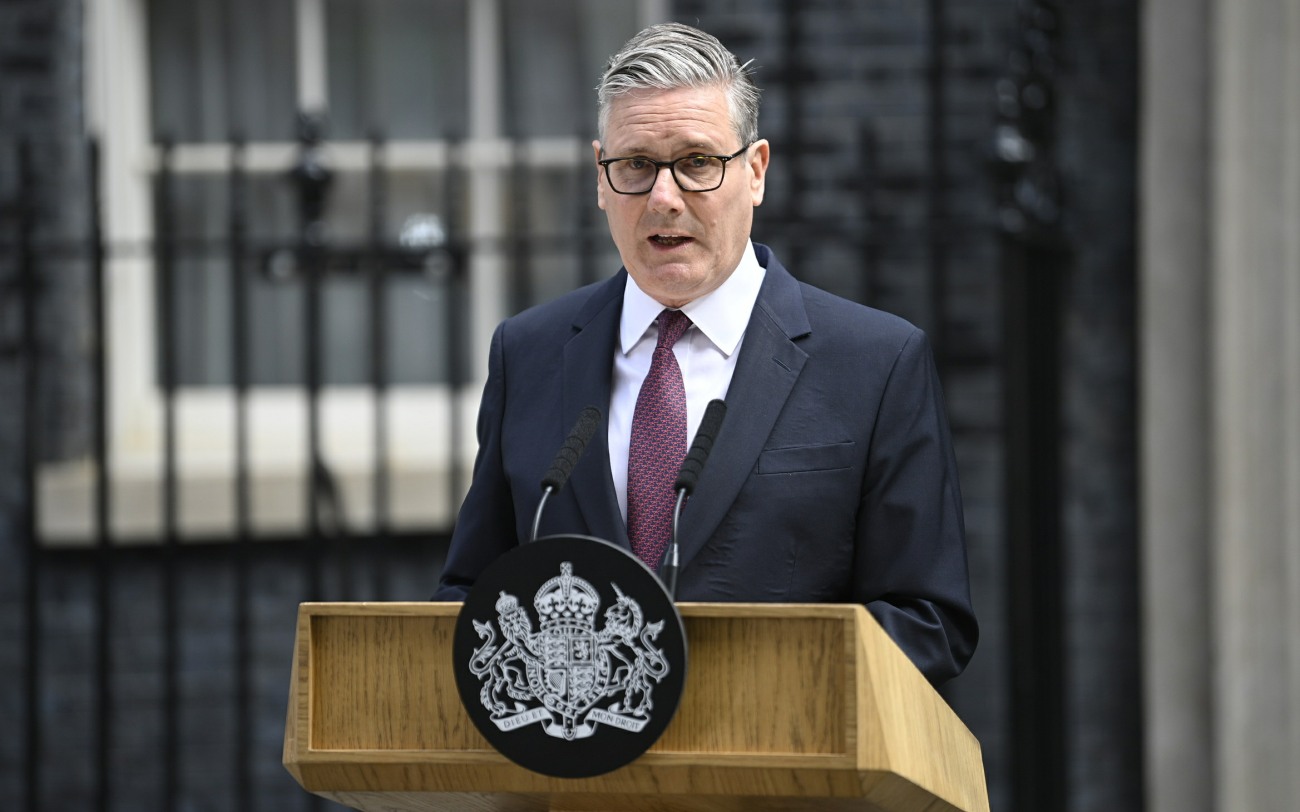
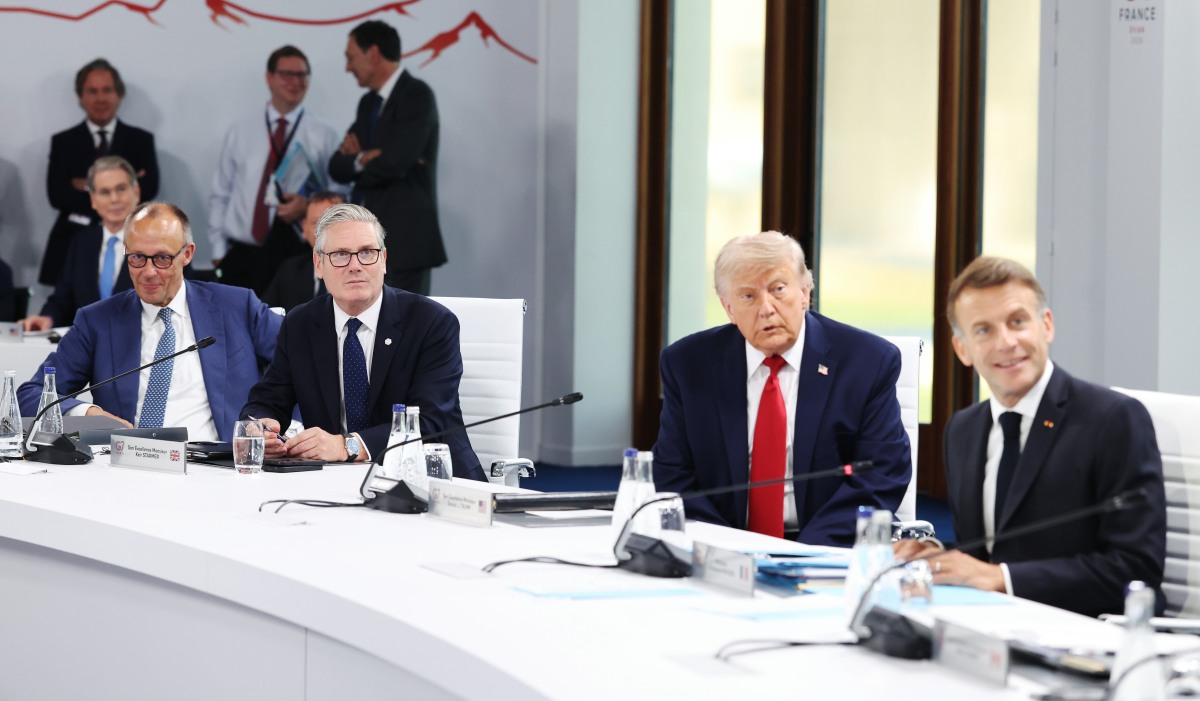
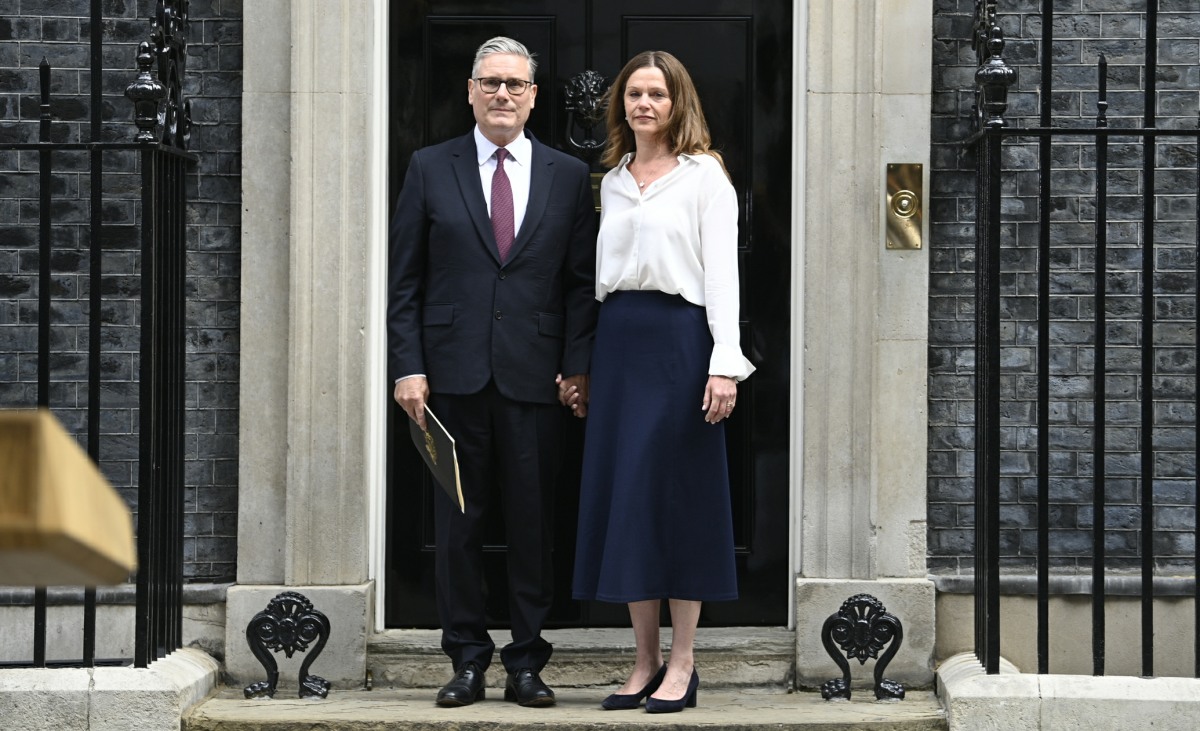
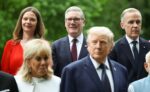
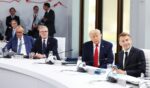
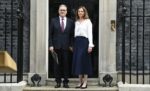
Last week, Keir Starmer was forced to sit and stand in front of Donald Trump at the G7 summit in France. Shortly afterwards, British and American media confirmed that Starmer would announce his phased resignation as UK Prime Minister. Same thing happened today. Keir Starmer walked out of Downing Street with his wife Victoria and announced he would step down as prime minister in September, when the new leader of the Labor Party is announced at the big Labor conference. July 4 marks the two-year anniversary of Labour’s landslide victory, but since then it has been all disappointments for Starmer and Labour.
British Prime Minister Keir Starmer announced his resignation on Monday, succumbing to a rebellion within his party and a challenge to his leadership of the country.
Mr Starmer said he would remain prime minister until a new party leader was selected by September, rather than fight to hold on to the post he won almost two years ago. His decision clears the way for Britain’s seventh prime minister in a decade, adding to a period of political turmoil in the country since it voted to leave the European Union in 2016.
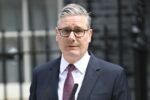
“The question my party is now asking is whether I am best placed to lead us into the next general election,” Mr Starmer said in brief remarks in front of No. 10 Downing Street.
He said, “I have heard the answer of my parliamentary party to that question and I accept that answer wholeheartedly.” “I will therefore resign as leader of the Labor Party. I have spoken to His Majesty the King this morning to inform him of my decision.”
The most likely replacement for Mr Starmer is Andy Burnham, whose landslide victory in a special election last week activated his attempt to oust the prime minister. Mr Burnham, a former mayor of Greater Manchester and one of Labour’s most popular politicians, received almost 55 per cent of the vote in the Makerfield district.
Mr Starmer’s term as prime minister begins in 2024 after Labor won a large parliamentary majority and ended 14 years of Conservative Party government. But Labor earned a record-low vote share of 34 percent in that election, leading analysts to call the victory a “loveless landslide”.
In his remarks, Mr. Starmer defended his record, citing economic recovery, investments in health care, increased military spending, declines in illegal immigration and other legislative accomplishments. “Change promised by a Labor government, change fought for by a Labor government, change delivered by a Labor government,” he said.
But the Prime Minister’s time in office was defined by political decline, making him appear weak, indecisive and not in command of his own party. In recent weeks, Mr Starmer had repeatedly vowed to fight any challenges to his position – from Mr Burnham or anyone else – saying he was not prepared to walk away from his responsibility to Britain. At last, he seemed to accept the political reality that came with being one of the least popular prime ministers in modern British history.
(from NY Times)
David Cameron really did impose a curse on Downing Street or perhaps modern British politics. Cameron’s tenure as Prime Minister lasted for six years, but he stepped down due to the Brexit vote. Since then it has been chaos – from Cameroon, to the UK there was Theresa May, then Boris Johnson, then poor Liz Truss/Lettuce, then Rishi Sunak and now Starmer. Someone said that seven prime ministers in a decade showed that Britain is a failed state. I think this shows that the British media has become too influential – while there is legitimate criticism of Starmer and Labour, the UK media and yellow-and-stale political class had their knives out for Starmer from the start.
One of the final outrages was that Donald Trump “announced” Starmer’s resignation on Sunday, before Starmer even had to give his speech today.
🚨 BREAKING: Donald Trump says Keir Starmer will resign as PM after “failing miserably” on immigration and energy pic.twitter.com/Y2NmHNePYi
– Politics UK (@PolitlcsUK) 21 June 2026
Photos courtesy of Avalon Red.
-
-
Keir Starmer makes an announcement regarding his future as British Prime Minister, Downing Street, London, UK, 22 June 2026., Image: 1111758032, License: Rights-managed, Restrictions:, Model Release: No, Credit Line: Justin Ng/Avalon
-
-
16/06/2026. Evian, France. Prime Minister Keir Starmer with his wife Victoria watches a concert with world leaders hosted by French President Emmanuel Macron in Evian on the second day of the G7 Leaders Summit. Image: 1110606752, License: Rights-managed, Restrictions: This image is for editorial use purposes only. Image cannot be used for advertising or commercial use. The image cannot be altered in any way. All images are Crown Copyright and reusable under the Open Government License v3.0, except otherwise, Model Release: No, Credit Line: Ben Perry/Avalon
-
-
17/06/2026. Evian, France. Prime Minister Keir Starmer during the ‘Reviving a balanced, shared and sustainable economic growth for all’ working session as he attends the third day of the G7 Leaders Summit hosted by French President Emmanuel Macron in Evian with his wife Victoria. Image: 1110745926, License: Rights-managed, Restrictions: This image is for editorial use purposes only. Image cannot be used for advertising or commercial use. The image cannot be altered in any way. All images are Crown Copyright and reusable under the Open Government License v3.0 except where otherwise, Model Release: No, Credit Line: Ben Perry/Avalon
-
-
Sir Keir Starmer with wife Victoria as he makes an announcement about his future as British Prime Minister, Downing Street, London, UK, 22 June 2026., Image: 1111756913, License: Rights-managed, Restrictions:, Model Release: No, Credit Line: Justin Ng/Avalon
-
-
Keir Starmer makes an announcement regarding his future as British Prime Minister, Downing Street, London, UK, 22 June 2026., Image: 1111757238, License: Rights-managed, Restrictions:, Model Release: No, Credit Line: Justin Ng/Avalon

Leave a Reply