
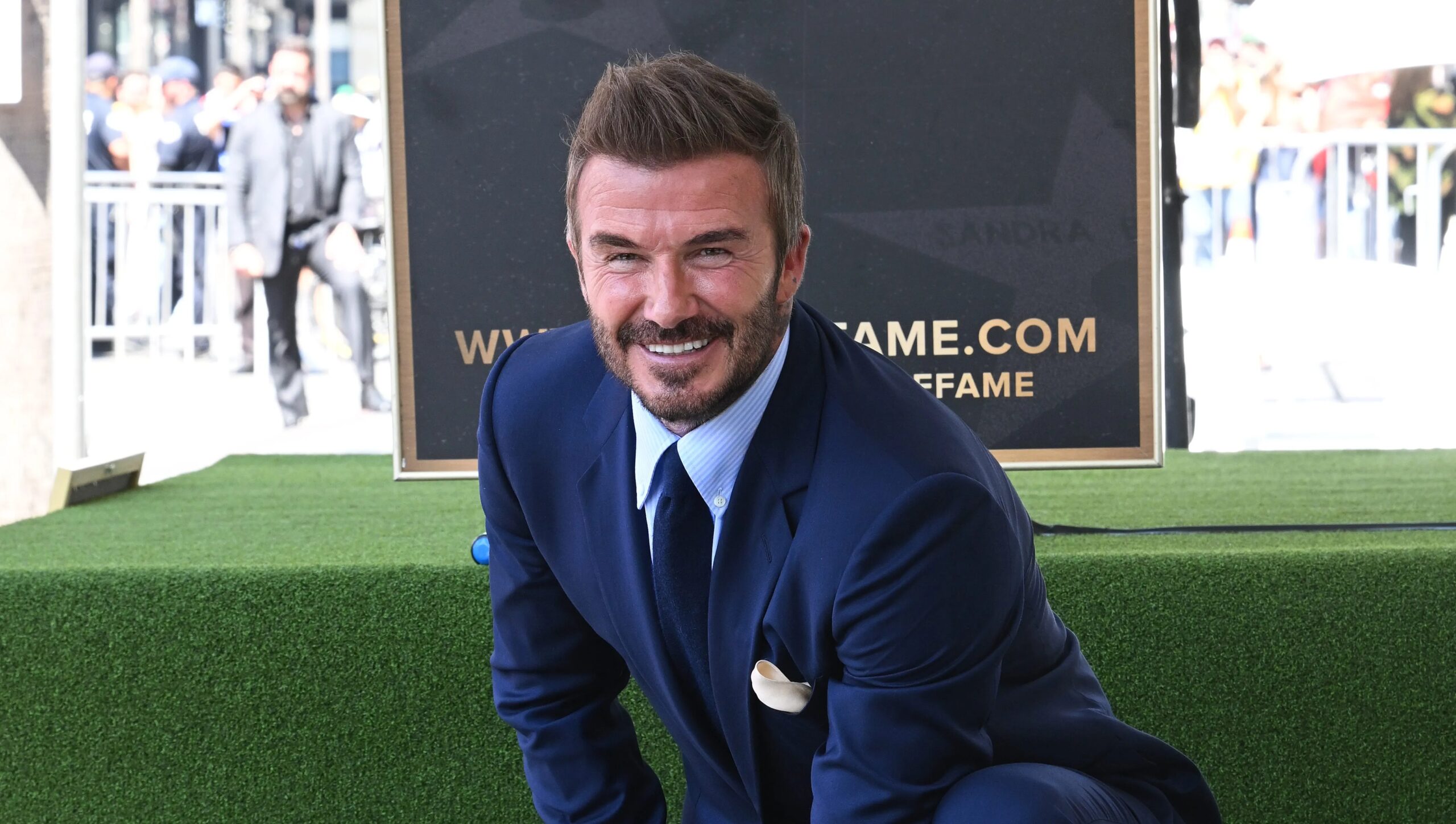

David Beckham an interviewer shuts down in the middle of the question. The subject? His 27 year old son, Brooklynhis daughter-in-law, Nicola Peltzand the family rift that has been in the headlines all year.
What he said instead was quieter and much more revealing. “Every day there is a mountain to climb.”
That’s not a press line. That’s a father describing what it feels like in his nervous system. And anyone who has ever been left out by an adult child, or left out by a parent, knows exactly which mountain he is talking about.
The Beckhams aren’t arguing about a wedding. Or a quote. Or a holiday photo where no one is tagged. I bet my office plant is on it.
The fight you fight is never the fight you fight
In my work with families, I call what the Beckhams are stuck in a “Waltz of Pain.” Every recurring fight is a protest. One person’s nervous system says: I don’t feel safe with you, I don’t feel seen, I don’t feel like I’m important to you anymore.
But no one says that out loud. Saying that is terrifying. Instead, families argue about weddings. Or press quotes. Or who is invited where. Or who posted what.
The real issue they are fighting about is attachment. Are you there for me? Am I still enough for you?
From the cradle to the grave you need emotional bonding, just like you need water. Your entire biology is designed to detect whether your primary attachment figure is present. And when it seems like it isn’t, your system protests, because that protest once kept you alive.
That wiring doesn’t turn off at age 27. When it comes to love, we are all still babies inside.
This is the structural shift the Beckhams are experiencing, whether they have a language for it or not. When a son marries, his primary attachment figure is no longer his mother or father. There is a new bond, a competing attachment, and the original family system must reorganize itself around it. Almost no family does this gracefully. It hurts everyone involved, and the pain comes out sideways, as criticism, as cold quotes, as silence at Christmas.
If you try to understand your own version of this, you can take our free relationship quiz and see in which pattern you are actually stuck.
Why top performers make mistakes more often than anyone else
David Beckham is one of the most disciplined artists in the world. Brooklyn grew up watching that. This also applies to Nicola, who grew up in her own high-achieving family. And this is what I see in it Figs and Teale’s couples therapy practice in San Francisco time and time again with these types of families.
High achievers think the problem is the problem. The wedding. The press. The in-laws. The wrong quote.
So they bring their problem-solving brains to the table. They try to turn the family into a project. They create mental memos. They’re building a business. They’re waiting for the apology that proves they were right.
But the problem is never the problem they are talking about. Underneath every Beckham-style impasse is an attachment system that asks one question: Am I still important to you?
I tell therapists in training: you can describe a mango for an hour. The color, the texture, the nutritional value. That’s not the same as tasting. High performers are brilliant at describing the mango of their relationship. They can analyze the communication breakdown like a board game. What scares them is tasting it, because tasting it means they feel the pain.
And when the pain manifests, high performers usually only see two things. I respond because I am right, logical and justified. You’re reacting because you’re emotional, unreasonable, and offensive.
One person strives harder. The other retreats into one close comment and more distance. Pursuer pushes. Recording disappears. Round and round, on and on, until finally someone notices it’s a waltz, and they both dance.
The parent-child repair is a one-way street
This is the part no one on the internet wants to hear because it’s less satisfying than choosing a villain.
There are always two truths in every family conflict. David’s truth makes sense. Brooklyn Truth makes sense. Nicola’s truth makes sense. Victoria’s truth makes sense. No one is unreasonable. Everyone is injured. They don’t respond to each other. They respond to what each other’s words mean in their bodies.
The most pain in any family comes from a collision without intention. Someone says something light. The other hears it through the ledger of his entire childhood. Their response damages the first person’s shame. The shame activates the protector. And now you’re in it.
Two truths. One loop. No villains.
But there is a piece of this that is specific to David’s situation as a father. Parent and adult child are not the same as spouse and partner. Even if the child is 27. Even if the child is 70 and the parent is 90. One person is still the parent. The other is still the child.
When it comes to repairs, it’s a one-way street. The parent should not look to the child to meet his emotional needs. We cannot expect the adult child to show up and soothe the father’s deepest emotional needs. The movement goes from parent to child: hey, I get it, I see it, I’m here, the door is open, no scorecard.
That is the mountain that David describes. Not the headlines. The daily, ego-hurting practice of staying the parent even when you’re the one feeling rejected.
What Brooklyn hears is not what David said
Fights aren’t the problem. Fights are the doorway. The only reason the Beckhams are still in so much pain is because they still love each other. If they didn’t care, there would be no protest. There would only be silence and a polite Christmas card.
Disconnecting is a feature, not a bug. The fact that it hurts so much, in public, with so much heat, means that they are still important to each other. That’s the part the tabloids will never put on the front page. And it’s the only part that actually cures anything.
__________________________________________________________________________________
Figs O’sullivan, the founder of Empathi and his wife, Teale, are relationship therapists in San Francisco, relationship experts from the Stars and Silicon Valley, founders of Empathi, and built Figlet, our AI relationship coach, an AI relationship coach trained in their clinical work.










Leave a Reply